Checkmate Advance
About the Game
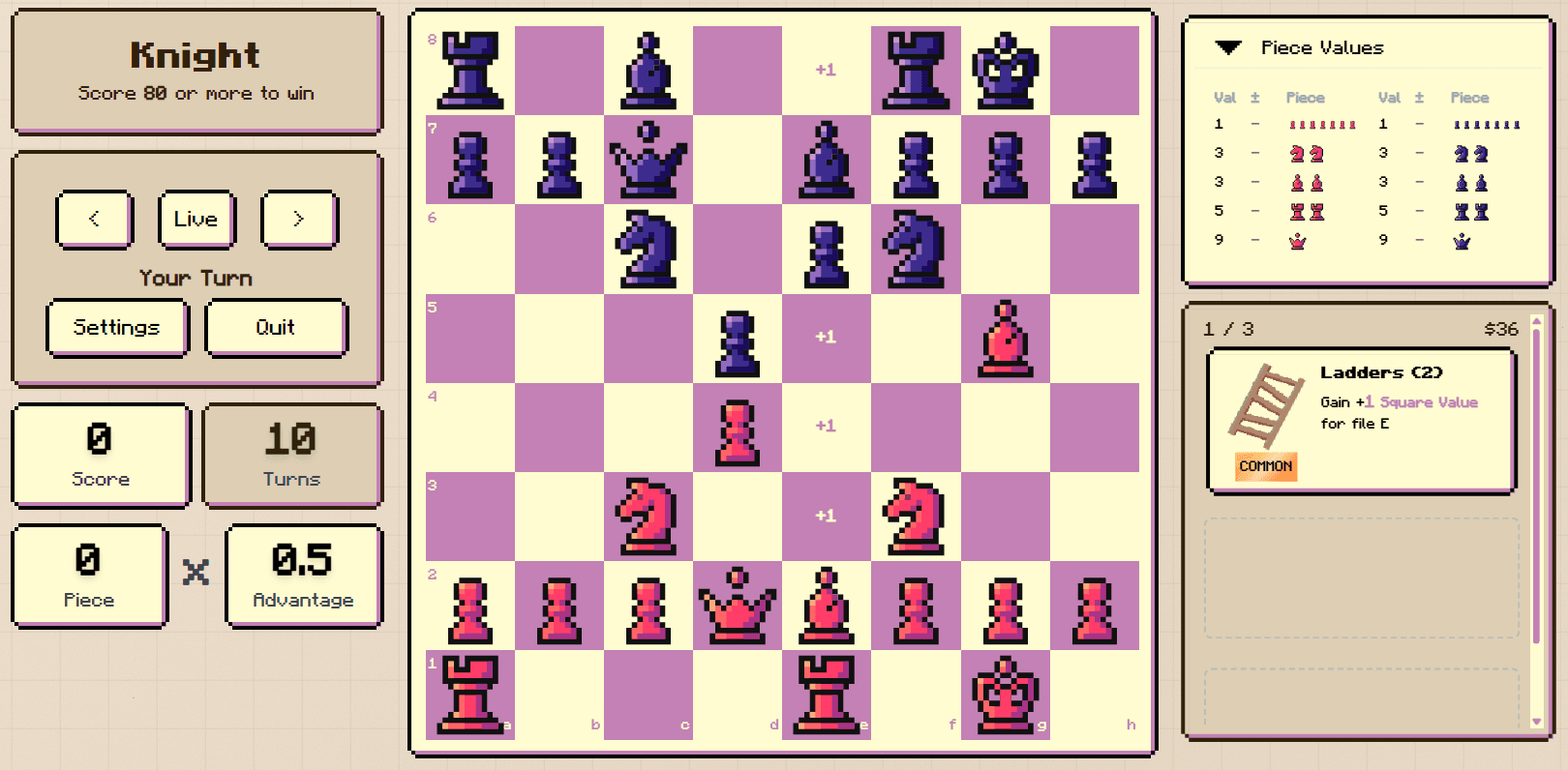
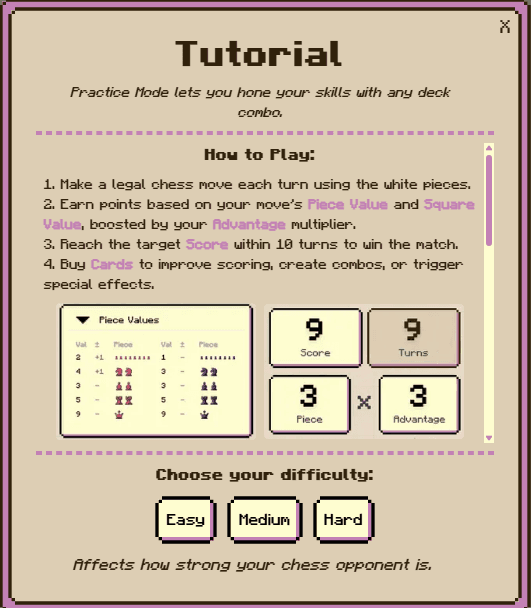
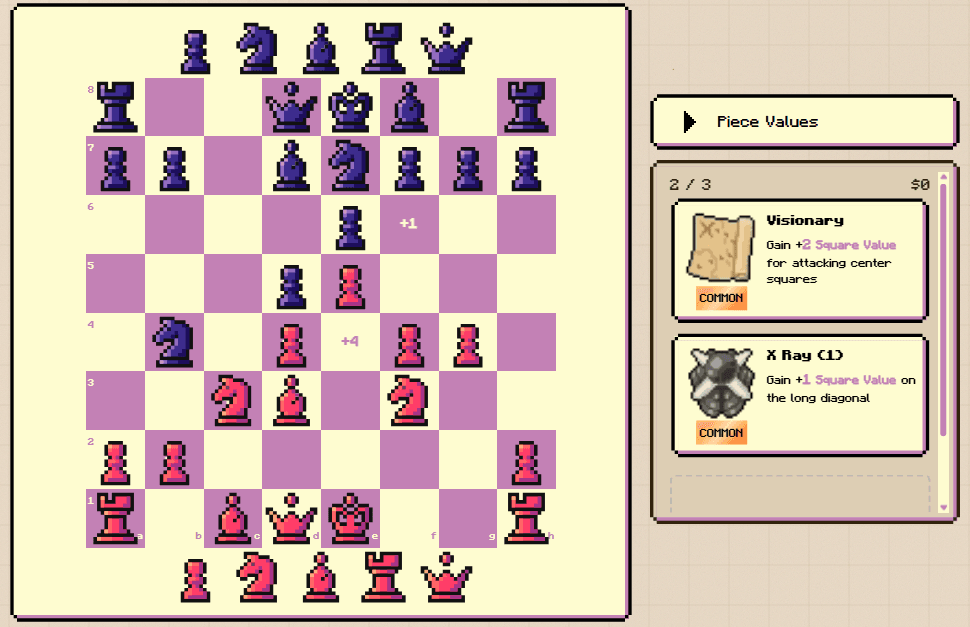
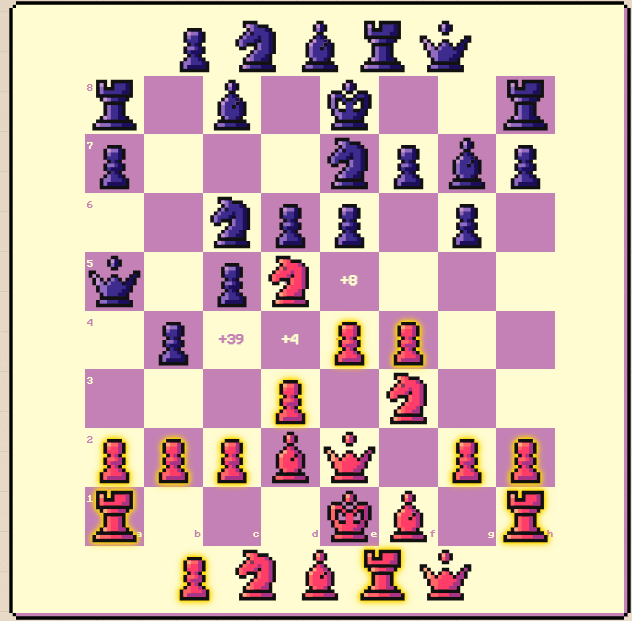
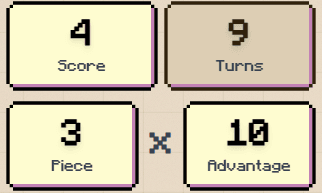
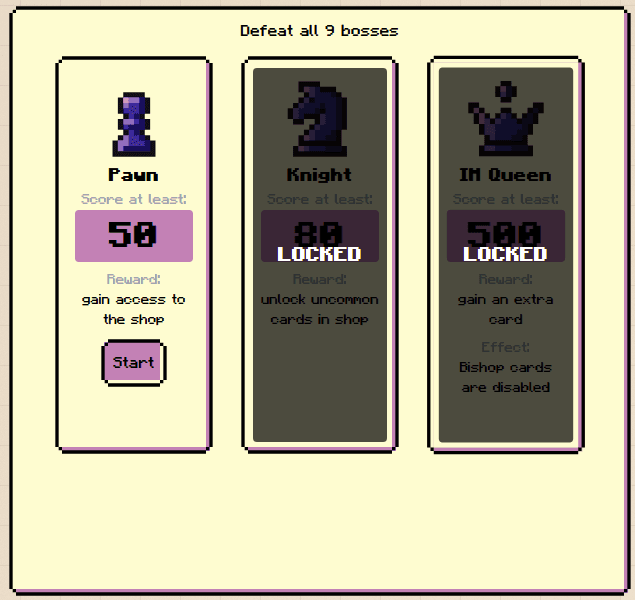
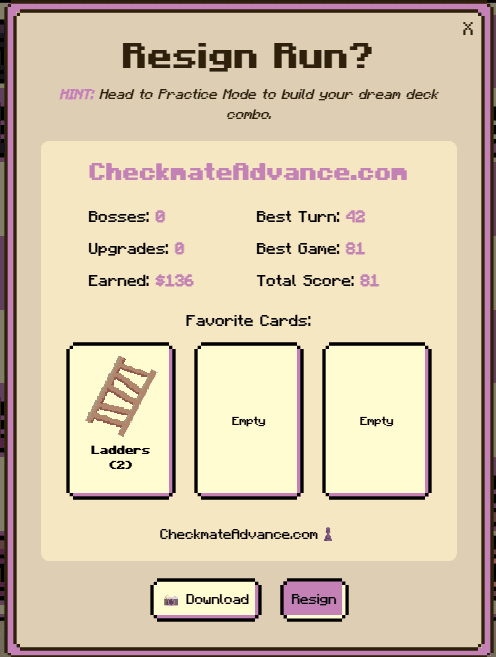
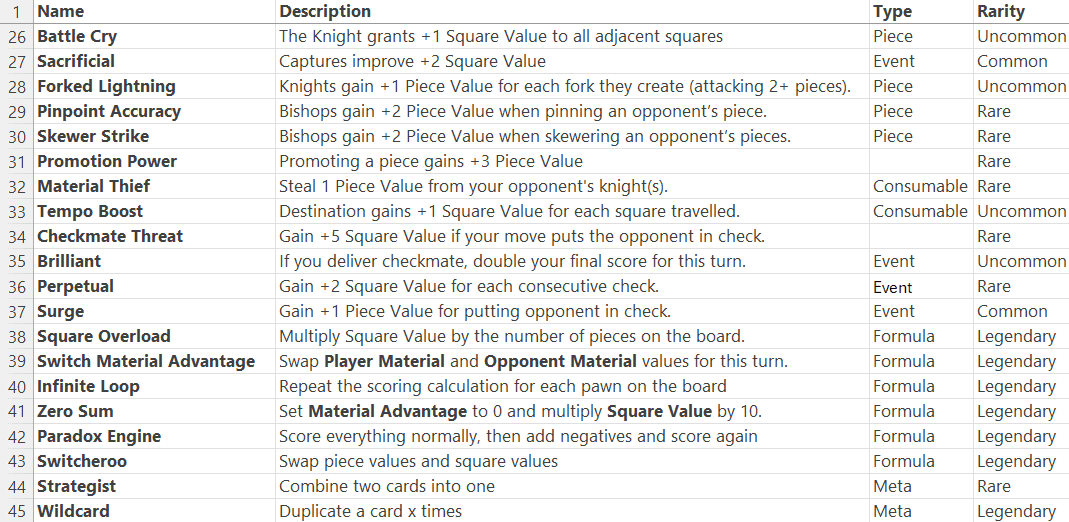
Checkmate Advance is a roguelike deckbuilder inspired by Balatro. The game runs entirely in the browser, and uses Stockfish chess AI to power the opponents. The game has a difficulty curve, and bosses have random effects to encourage replayability.
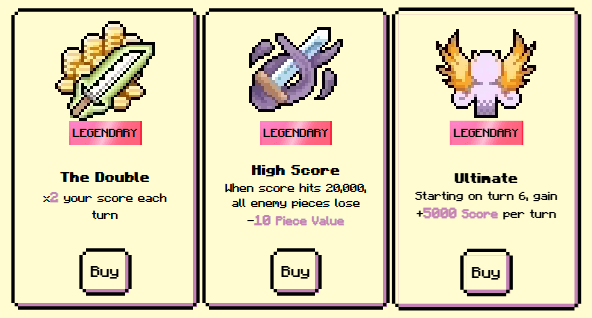
Combining chess gameplay and roguelike deckbuilding, this game features 80 unique upgradeable cards. Play through nine story levels, as well as an endless mode, and practice mode. All combined with a retro pixel art-style and sound effects.
Release Date: April 2025
Platforms: web, checkmateadvance.com
Developers: Ian Durra,
Music: Matthew A. Ivic
Tools: React, Typescript, Chess.js, Stockfish.js
Backstory
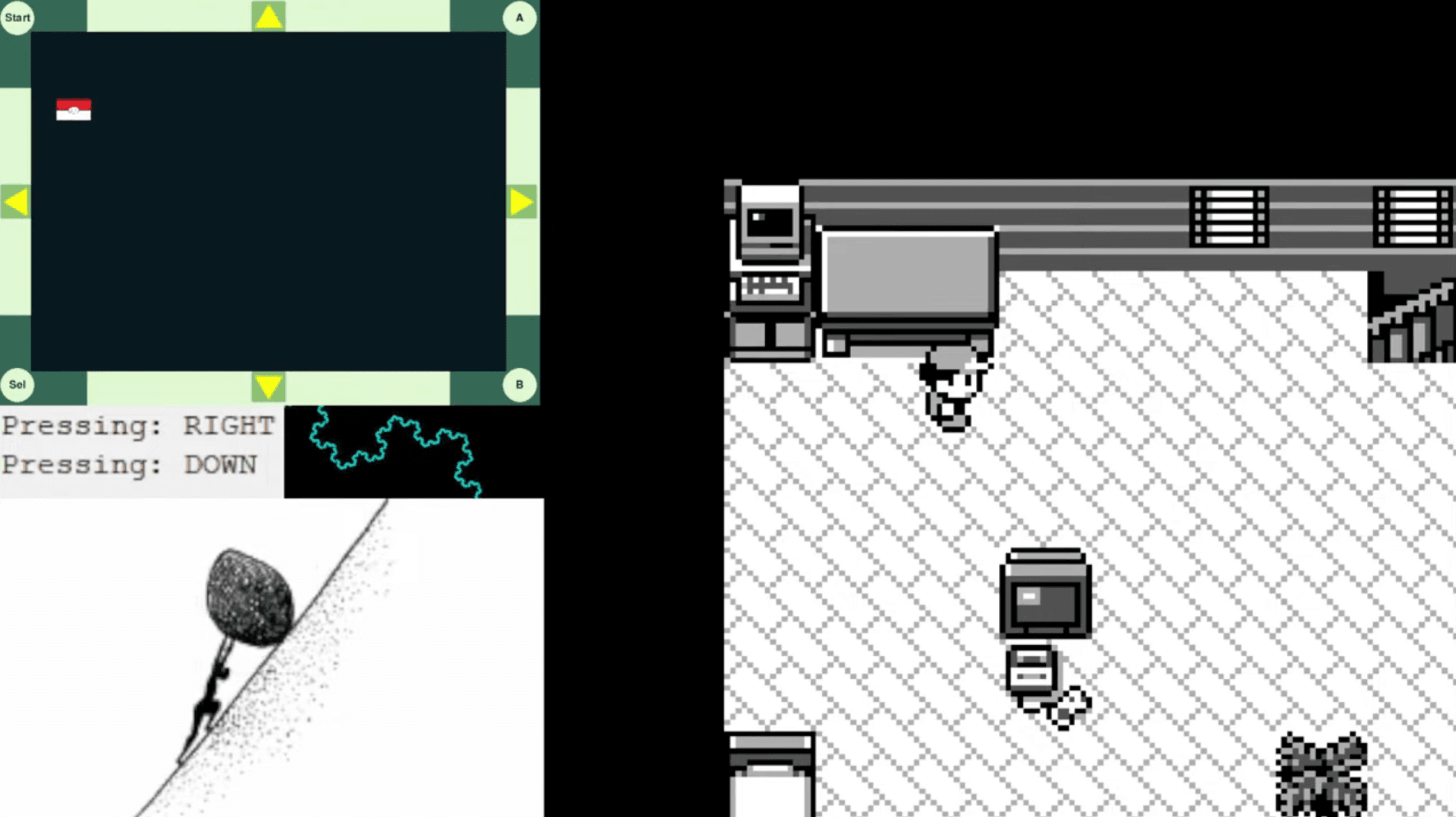
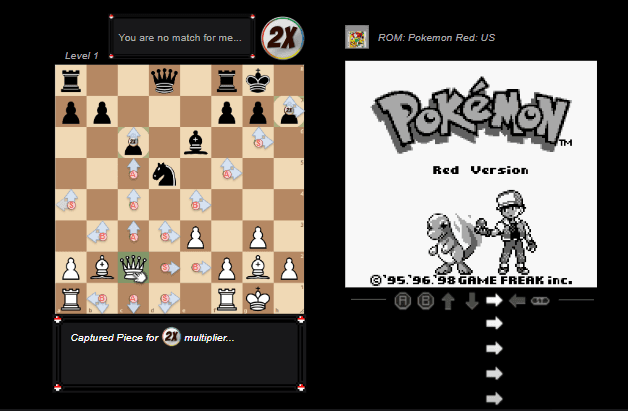
What turned into a balatro-inspired chess experiment was initially a chessboard hooked into a gameboy emulator. I had ideas that players would simultaneously pick chess moves that also acted as inputs for a gameboy. Eventually I would scrap this idea due to copyright infringement, as well as being inspired by Balatro's application of the roguelike-deckbuilder genre to Poker. Balatro's game mechanics solved a lot of the questions I was pondering, mainly how do I preserve the fun of chess, while adding a game on top.
Screenshots
Working Without a Game Engine
Checkmate Advance is built without a game engine or graphical user interface. This is because I started out making an emulator for the web, and shifted to making a game mid-development. As I learned more about game development, I started to understand the constraints I was working against by developing in the browser. Animating chess pieces was incredibly difficult, and preventing lag was a constant struggle. This struggle inspired me to switch to a proper game engine for my next game, and would kick off my journey into taking game development more seriously.
Playtesting
“4/11/25: Sent the game out for play-testing. General feedback I received was people who are fans of chess like the game, and are able to overcome its challenges... The three play-testers who don't play chess found the game to be esoteric and confusing.”I was suprised at the positive feedback I recieved from playtesters. Being deep in development, all I could see was the flaws of the game, but playtesting helped me get an accurate perception of how the game was coming across to players.After that first round of playtesting, I spent another month cleaning up the game, adding graphics, and tuning the difficulty. I decided to release this first game on a website only, and promote it via my personal social media.